


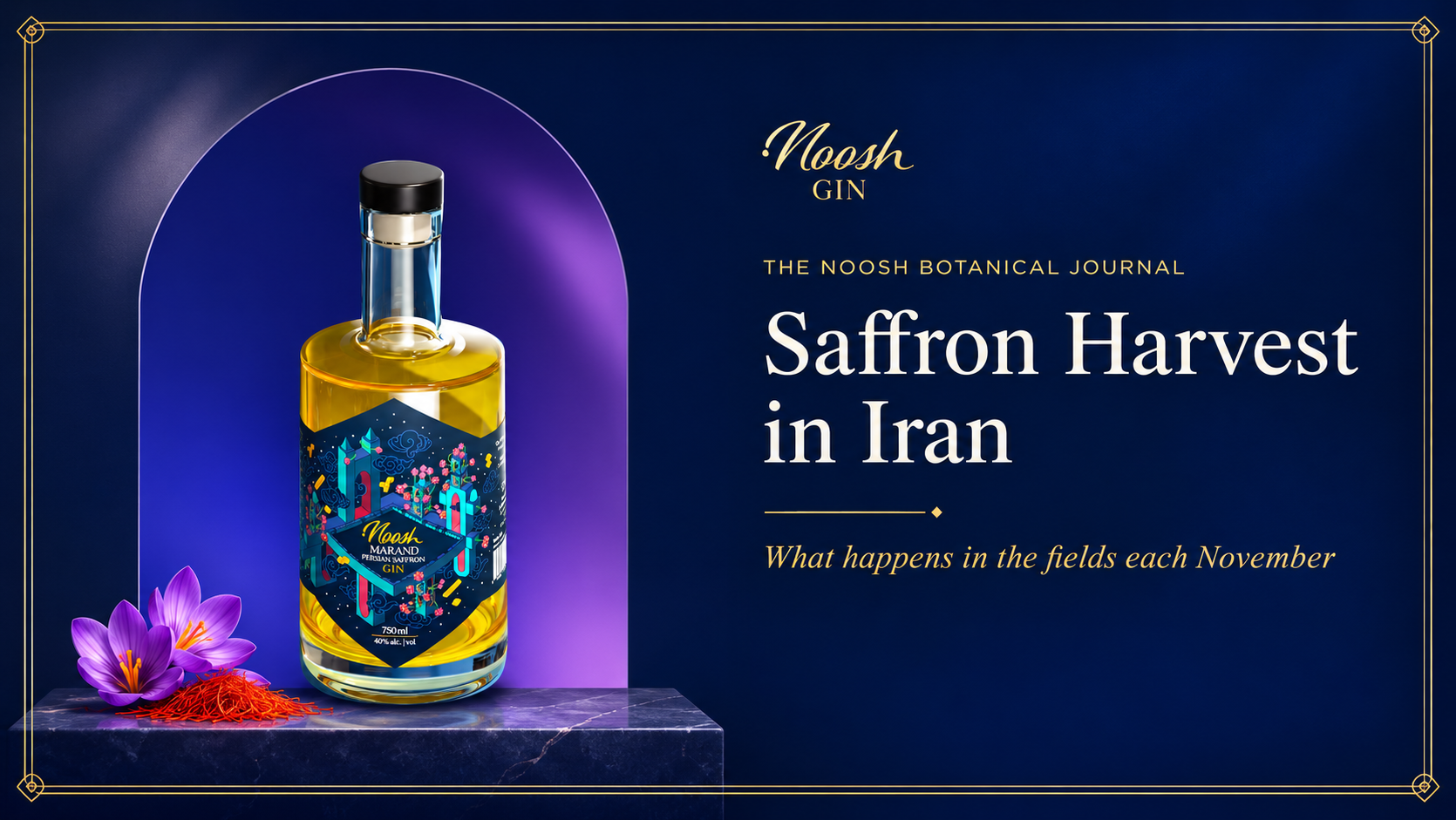
“A saffron flower gives you one morning, so the work starts before sunrise.”
Each delicate saffron flower produces just three crimson threads, with only a brief window to harvest them. Every autumn, this remarkable tradition unfolds across Iran’s saffron fields, where generations of knowledge and careful hand-harvesting bring one of the world’s most precious spices to life.
For us at Noosh, this harvest holds special meaning. It’s where the story of our Persian Saffron Gin begins.
Let’s explore the journey from field to harvest.
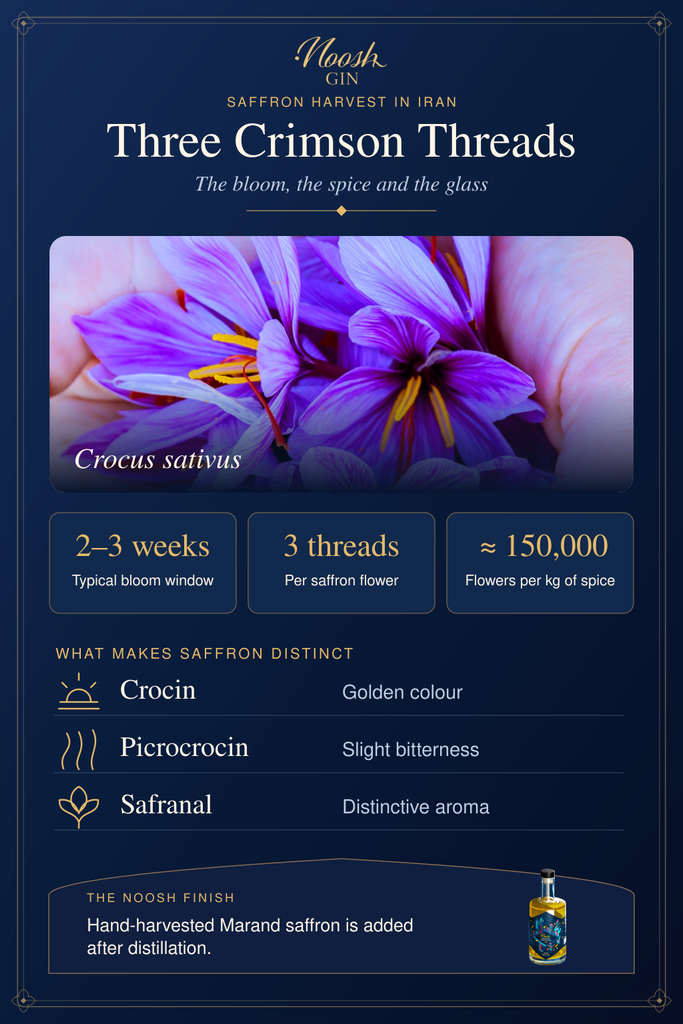
Saffron harvesting takes place each autumn, typically from October through November, depending on the region and weather conditions. The delicate purple crocus flowers bloom for just two to three weeks, with each flower lasting approximately one day.
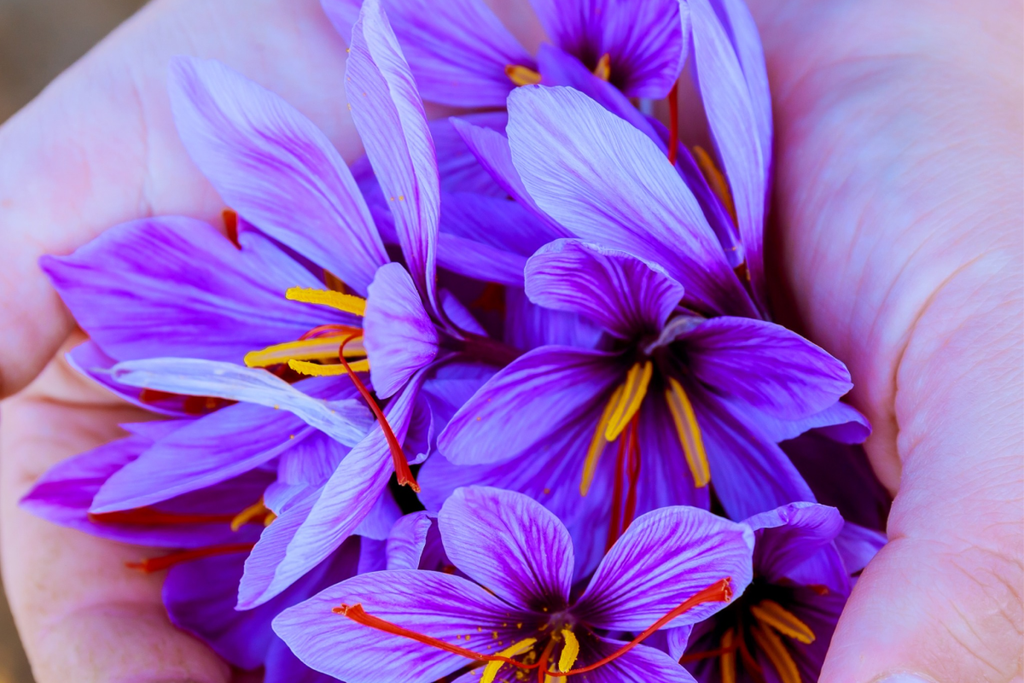
Every flower is carefully harvested by hand, yielding only three precious crimson stigmas. Producing a single kilogram of dried saffron requires approximately 150,000 flowers, making it one of the world’s most labor-intensive and valuable spices.
Now, let’s follow the season from the first irrigation to the last sealed jar.
Every autumn, Iran’s saffron fields come alive with the delicate purple blooms of the saffron crocus. By November, farmers are often approaching the final weeks of a short but remarkable harvest season. From preparing the fields to carefully collecting and drying the crimson threads, each stage requires patience, precision, and generations of knowledge.
The saffron season begins with irrigation, typically in late September or October, depending on the region and weather conditions. Within a few weeks, the first purple crocus flowers begin to emerge, marking the start of the harvest.
In Marand, located in Iran’s East Azerbaijan province, saffron cultivation is shaped by the region’s climate and agricultural traditions. This is where the saffron used in Noosh Persian Saffron Gin originates.
Saffron harvesting traditionally begins in the early morning, while temperatures are cool and the delicate flowers are still closed or just beginning to open.
Each flower is carefully picked by hand to preserve the quality of its precious crimson stigmas. With such a short flowering season, farmers work efficiently to gather the blooms at their freshest.
Once harvested, the flowers are carefully opened, and their three crimson stigmas are separated by hand.
The threads are then dried under controlled conditions to preserve their distinctive colour, aroma, and flavor. Once dried, the saffron is carefully stored away from moisture and light to maintain its quality.
Saffron’s distinctive character comes from three naturally occurring compounds:
These natural compounds are essential to the character of Noosh Persian Saffron Gin. By introducing saffron during the finishing stage, after distillation, we preserve its golden hue and distinctive aromatic qualities without artificial colouring.
Saffron harvesting is a deeply rooted agricultural tradition, bringing together families and communities during the short autumn season.
Women play an important role in saffron cultivation and processing, particularly in the delicate work of separating the crimson stigmas from freshly harvested flowers.
As a woman-founded brand inspired by Persian heritage, we value the craftsmanship, dedication, and generations of knowledge behind this remarkable botanical.
Iran produces the vast majority of the world’s saffron, making this centuries-old tradition an important part of the country’s agricultural and cultural heritage.
Producing just one kilogram of dried saffron requires approximately 150,000 to 230,000 delicate crocus flowers. Each flower produces only three crimson stigmas, making saffron one of the world’s most labour-intensive spices.
According to a peer-reviewed scientific review, producing one kilogram of saffron can require approximately 370 to 470 hours of labour, from harvesting to processing.
This remarkable dedication, combined with the short flowering season and delicate handling required, explains why saffron is often called red gold.
We named our Persian Saffron Gin Marand in honour of the city in Iran’s East Azerbaijan province, where our signature saffron originates.
While other saffron-producing regions may be more widely recognized, we wanted to celebrate Marand and its connection to this extraordinary Persian botanical.
Hand-harvested saffron from Marand plays a defining role in the character of Noosh Persian Saffron Gin.
Explore the Persian heritage behind our saffron through The Persian Saffron Story.
Yes. Saffron harvesting is a delicate, labour-intensive process. Each flower is carefully picked by hand, and its three crimson stigmas are separated, typically on the same day, to preserve their quality. This traditional process requires patience, precision, and remarkable attention to detail.
Saffron is one of the world’s most valuable spices because of its short harvest season and labour-intensive production. Each flower produces only three crimson stigmas, and approximately 150,000 flowers are needed to produce just one kilogram of dried saffron. Every stage, from harvesting to separating and drying the threads, requires careful handling.
Saffron is traditionally harvested in the early morning, when temperatures are cooler and the delicate flowers are still closed or just beginning to open. Harvesting early helps protect the flowers and maintain the quality of their precious stigmas.
Our hand-harvested saffron from Marand is introduced during the finishing stage, after distillation. This carefully chosen process allows the saffron to contribute its distinctive aroma, gentle warmth, and natural golden colour to Noosh Persian Saffron Gin.
From the first purple blooms of autumn to the careful separation of their precious crimson threads, saffron harvesting reflects generations of Persian agricultural tradition.
At Noosh, we honour this heritage by bringing hand-harvested saffron from Marand into our Canadian-crafted gin. Added after distillation, this extraordinary botanical gives Noosh Persian Saffron Gin its distinctive golden colour, warm aroma, and unique character.
From the saffron fields of Persia to every golden sip of Noosh, a tradition worth celebrating.

COME BACK AGAIN!
you must be over 18 to preview our website.