


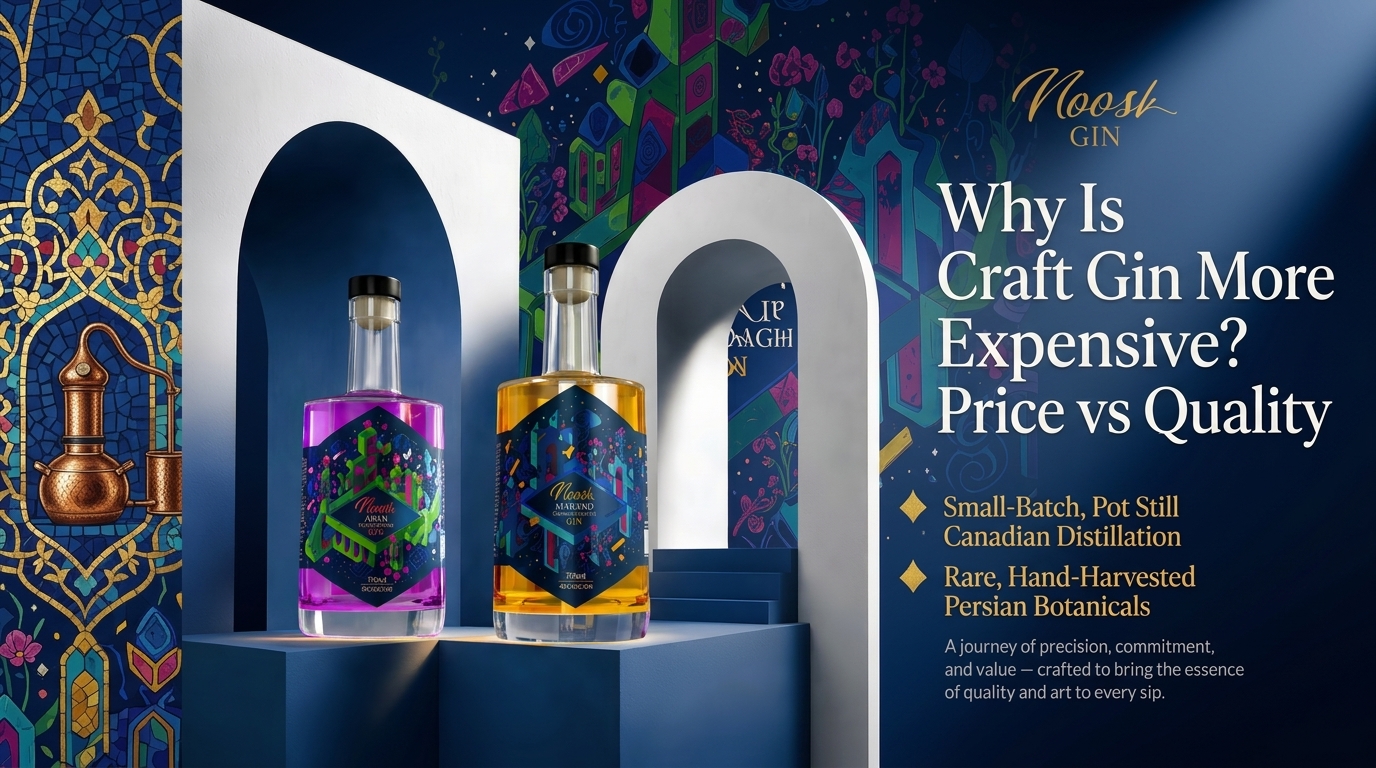
Craft gin often costs more than mass-produced gin because it is made on a smaller scale, often using distinctive botanicals, hands-on production methods and more considered packaging.
For Noosh, those differences begin with its signature Persian botanicals and continue through small-batch production in Canada.
So, why is craft gin more expensive than regular gin?
The answer comes down to what goes into the bottle, how it is made, and the scale at which it is produced.
A craft bottle carries decisions you may never see. Production scale matters, but botanicals, distillation, packaging and presentation can shape the final price just as strongly.
Small-batch production changes the economics quickly. Heat, cleaning, labour, equipment time, bottling and storage still carry costs even when fewer bottles leave each run.
Larger producers can spread many of these expenses across much greater volumes.
Noosh Gin is crafted in Canada in small batches using pot still distillation, keeping the process deliberately hands-on.
Ingredients can influence cost before distillation even begins.
Marand Saffron Gin is built around Persian saffron from Marand, a botanical prized for its distinctive aroma, colour and demanding harvest.
Aran Rose Gin takes a different direction with Persian rose from Aran & Bidgol, creating a lighter, delicately floral expression.
These signature botanicals bring more than flavour to each gin. They connect each expression to a particular place, culture and botanical tradition.
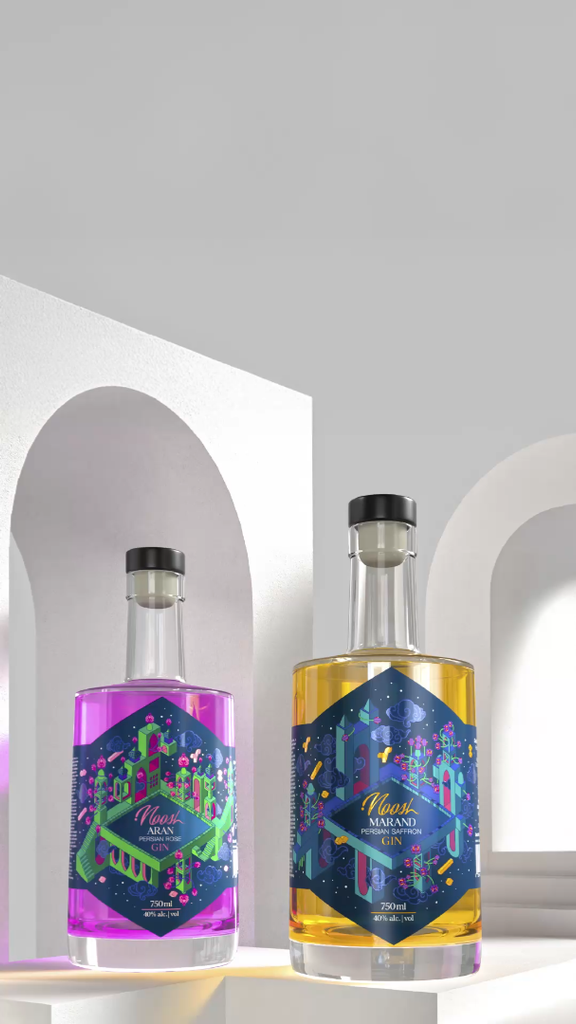
Craft production continues after the spirit leaves the still. Smaller runs also affect bottling, labels, cartons, storage and freight, while custom packaging can carry a higher cost per bottle when production quantities remain modest.
For Noosh, presentation is part of the experience. The packaging draws inspiration from Persian garden architecture, where balance, beauty and harmony shape the visual story.
That design has also been internationally recognized, receiving a Silver A’ Design Award in Italy.
Each bottle therefore brings together two forms of craft: the spirit itself and the cultural world surrounding it.
A full bottle price can feel very different when you look at what each individual pour actually costs.
Using a bottle price of $58.99 for 750 mL, Marand Saffron Gin works out to approximately:
| Measure | Estimated Value |
| Bottle Price | $58.99 |
| Bottle Volume | 750 mL |
| Cost per Ounce | $2.33 |
| Approx. Two-Ounce Pours | 12.7 |
| Cost per Two-Ounce Pour | $4.65 |
Approximate values based on bottle price only, before tax, shipping, mixers or garnish.
Looking at cost per pour puts premium pricing into a more practical context. A two-ounce Marand serve contains about $4.65 worth of gin, while a one-ounce pour is approximately $2.33.
The question then becomes less about the shelf price of the bottle and more about the quality and experience delivered with each pour.
For Noosh, craft begins with what goes into the bottle.
Marand is built around Persian saffron from Marand, giving the gin its distinctive golden colour, aromatic warmth and character. Aran takes a different direction with Persian rose from Aran & Bidgol, creating a lighter, delicately floral expression.
Both are crafted in Canada in small batches, bringing Persian botanicals into a distinctly Canadian craft gin.
Noosh is Canada’s first gin infused with Persian botanicals, created by founder Samira Saadatian as an independent, woman-founded and woman-owned brand.
Craft extends beyond the liquid. Noosh’s packaging received a Silver A’ Design Award, while Noosh Saffron Gin received Gold at the 2026 Canadian Artisan Spirit Competition.
Together, the botanicals, small-batch production, design and provenance help explain what sits behind the price of each bottle.
Craft gin is generally produced in smaller quantities than mass-market gin. Smaller production runs, distinctive botanicals, hands-on distillation and specialized packaging can all increase the cost per bottle.
Scale is particularly important: large producers can spread production, packaging and distribution costs across substantially more bottles.
What Makes a Gin Premium?
A higher price alone does not make a gin premium.
Look instead at the ingredients, sourcing, production, flavour and craftsmanship behind the bottle. Presentation can also contribute when it reflects a genuine connection to the spirit and its story.
With Noosh, Persian saffron and rose give each expression its own identity, while Canadian craft production brings those botanicals into a modern gin.
What Is the Best Craft Gin?
There is no single best craft gin for every palate.
Some drinkers prefer dry, juniper-led styles, while others enjoy citrus, spice or floral expressions. Consider the botanicals, tasting profile and how you plan to enjoy the gin.
Recognition can provide useful context as well. Noosh Saffron Gin received Gold at the 2026 Canadian Artisan Spirit Competition, but ultimately your own glass is the final test.
So, why is craft gin more expensive than regular gin?
Smaller production runs, distinctive botanicals, hands-on distillation and considered packaging can all contribute to a higher bottle price. But price alone does not define a premium gin.
What matters is what the bottle gives back: the ingredients, craftsmanship, character and experience in every pour.
At approximately $2.33 per ounce — or $4.65 for a two-ounce Marand pour — the value of the bottle can also be considered one glass at a time.
With Noosh, each bottle brings together Canadian craft and Persian botanicals in an expression designed to be distinctive from the first pour to the last.

COME BACK AGAIN!
you must be over 18 to preview our website.