


“Saffron gin reveals itself slowly — first through aroma, then through warmth.”
Saffron gin has a warm, aromatic and subtly earthy character, with delicate spice and floral notes that add depth while allowing the classic character of gin to remain unmistakable. In Marand Persian Saffron Gin, saffron creates a layered, smooth expression with warmth that develops gradually from the first sip through to the finish.
For us at Noosh, saffron brings much more than colour to the glass. Our Marand Persian Saffron Gin is built around hand-harvested saffron from Marand, giving the gin its distinctive aroma, warm character and naturally golden colour.
Each saffron crocus produces only three delicate crimson stigmas—the threads we know as saffron. That remarkably small yield is one reason saffron has been so carefully valued for its colour, aroma and flavour.
So, what creates that experience in the glass? Let’s explore Marand from its aroma and first sip through to its finish—and the different ways to enjoy its distinctive saffron character.
Before the first sip, Noosh Persian Saffron Gin already gives you a sense of its character. Its naturally golden colour comes from saffron, while its aroma is bright, floral and complex.
On the palate, the flavour develops gradually. It begins with the familiar character of gin, then moves into saffron, warm spice and softer floral notes. The finish is layered, gently warming and spice-driven.
| Tasting Stage | What You May Notice |
| Aroma | Bright, floral and complex |
| First Sip | Classic gin character with good botanical intensity |
| Mid-Palate | Saffron, floral notes and warm spice |
| Texture | Silky, creamy and mouth-coating |
| Finish | Long, layered and spice-driven |
When Noosh Persian Saffron Gin received Gold at the 2026 Canadian Artisan Spirit Competition, the judges highlighted its complexity, botanical character, texture and distinctive saffron expression.
One judge described it beautifully as:
“Classic gin notes wrapped in luscious notes of saffron and light spice.”
Another described the finish as “long and layered,” while other notes highlighted its bright golden colour, floral aromas and spice-driven finish.
Some of our favourite descriptions have come from people tasting Noosh Persian Saffron Gin themselves. At our first BC Gin Festival, guests called it “a unique style of gin,” “very smooth,” and “a game changer.” One guest described the progression beautifully:
“It’s got spice, but then it rolls over to floral.”
Another compared the experience to “a warm summer day with a little bit of burn,” calling it “really beautiful.”
And perhaps one of the most memorable reactions:
“If Champagne were gin, it would be the Saffron Gin by Noosh.”
These reactions capture what makes Noosh Persian Saffron Gin distinctive: warmth, spice and floral character unfold in layers, while the spirit remains unmistakably gin.
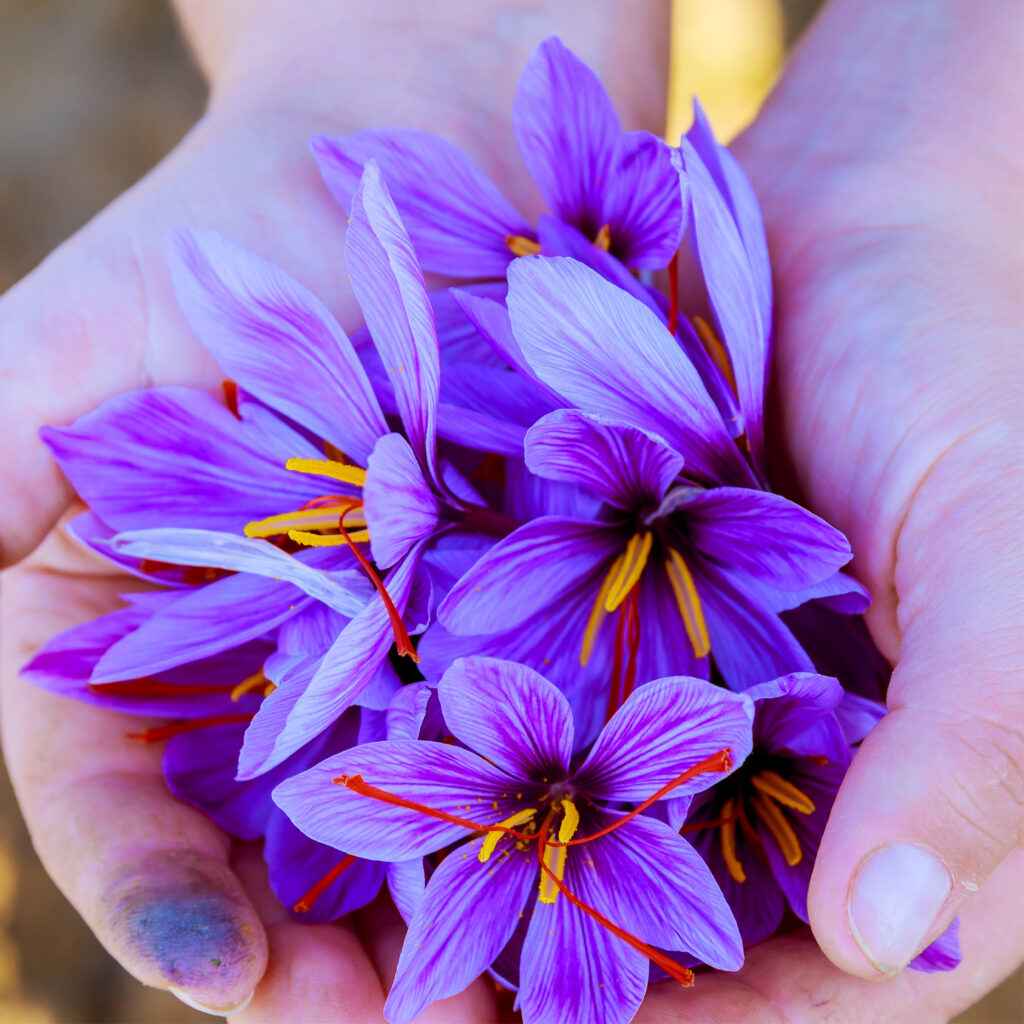
The name Marand was chosen with intention. It honours the region where our hand-harvested saffron comes from and connects the name of the gin directly to its signature botanical.
Saffron has long held a special place in Persian culture, from food and drinks to celebrations and gathering tables. Its distinctive aroma, colour and warmth are instantly familiar to many who grew up with it.
When creating Noosh Persian Saffron Gin, we wanted that character to remain recognisable rather than disappear into the background. Marand is our way of bringing that treasured botanical into a contemporary Canadian gin while preserving the connection to where it comes from.
As Canada’s first gin infused with Persian botanicals, Noosh brings together Persian botanical heritage and Canadian craft distillation—creating something familiar in its roots, yet distinctly different in the glass.
Saffron has a layered character, so we prefer mixers and garnishes that leave some room around it.
A very sweet mixer can make the gin feel heavier. Strong flavours can also cover the saffron before you have the chance to notice it.
Start simply.
Food can follow the same principle. Olives, roasted nuts, soft cheeses, citrus-led appetisers, and lighter savoury dishes give the saffron space to remain present.

Your first glass does not need many ingredients.
In fact, a simple serve makes it easier to understand what the saffron is doing.
Start with one part Marand and around two parts chilled light tonic. Add plenty of ice and finish with orange peel.
If you prefer a lighter drink, add a little more tonic after tasting.
Pour a small measure over a large ice cube and give it a moment before drinking. A little dilution can open the citrus and spice while keeping the saffron clear.
A small, slightly chilled pour lets you taste the gin without a mixer. This is one of the easiest ways to notice the shift from juniper and citrus into saffron and warm spice.
For a more structured cocktail, our Golden Negroni combines Marand with Cocchi Americano and Luxardo Bitter Bianco, finished with an orange twist or dehydrated citrus.
We also use Marand in the Golden Noosh Fizz, where elderflower and sparkling wine bring out a softer side of the saffron.
Marand carries a subtle earthy sweetness from saffron, but the overall gin remains dry. Juniper, orange peel, angelica, cardamom, and coriander keep that sweetness in balance.
There can be a gentle bitter edge. Saffron naturally contains picrocrocin, a compound associated with its characteristic bitterness. In the glass, that note sits behind the citrus, juniper, and spice rather than dominating them.
We recommend beginning with a light, clean tonic. It gives you enough bitterness and carbonation to support the gin without covering the saffron and citrus.
Orange peel is a natural starting point because fresh orange peel is already part of Marand’s botanical profile. Lemon also works when you want a slightly sharper citrus lift.
Yes. A small chilled pour is a useful way to understand Marand before adding a mixer. You can notice the juniper, saffron, citrus, and spice more clearly.
The golden-yellow colour comes naturally from Persian saffron. During Noosh’s finishing process, saffron is introduced after distillation, allowing it to contribute its aroma, character, and distinctive colour to Marand.
So, what does saffron gin taste like? In Marand, saffron brings warmth, earthy depth and a naturally golden colour, while juniper and fresh orange keep the gin bright and familiar. Cardamom, coriander and angelica add gentle spice and structure through the finish.
For us, saffron is the signature botanical of Marand. Its character connects the gin to its Persian origin while the surrounding botanicals give it balance in the glass.
If you are tasting Marand for the first time, begin simply with ice and a light tonic or club soda. It gives the saffron, citrus and spice room to show themselves clearly.

COME BACK AGAIN!
you must be over 18 to preview our website.